
Rebuild a Complete, Balanced Bite Without a Removable Appliance
A missing tooth affects more than the gap you see. It changes how your bite comes together, how your other teeth wear and how comfortably you chew. At Galdiano Dentistry in Oceanside, CA , we approach fixed bridges as a prosthodontic restoration. Before we design your bridge, we look at your whole mouth, your bite and your long-term plans. The result is a permanent, natural-looking replacement that restores function, protects your remaining teeth and fits the rest of your smile.
Request an AppointmentFixed Bridges as Part of a Prosthodontic Treatment Plan
Prosthodontics is the branch of dentistry focused on replacing and rebuilding teeth so the bite works as a whole. A fixed bridge is one of its most dependable tools. It spans the space left by one or more missing teeth and is cemented in place, so you never take it out. Our restorative dentistry bridge page covers the basics of the treatment. This page explains how we plan a bridge when it is one piece of a larger effort to restore your bite, your chewing efficiency and the look of your smile.
Every bridge starts with a careful evaluation. We check the health of the teeth next to the gap and the condition of your gums. We also look at how your upper and lower teeth meet and whether other teeth have already started drifting into the empty space. Digital X-rays let us see the roots and supporting bone, so we know whether the neighboring teeth are strong enough to carry a bridge for years to come.
How a Fixed Bridge Is Built
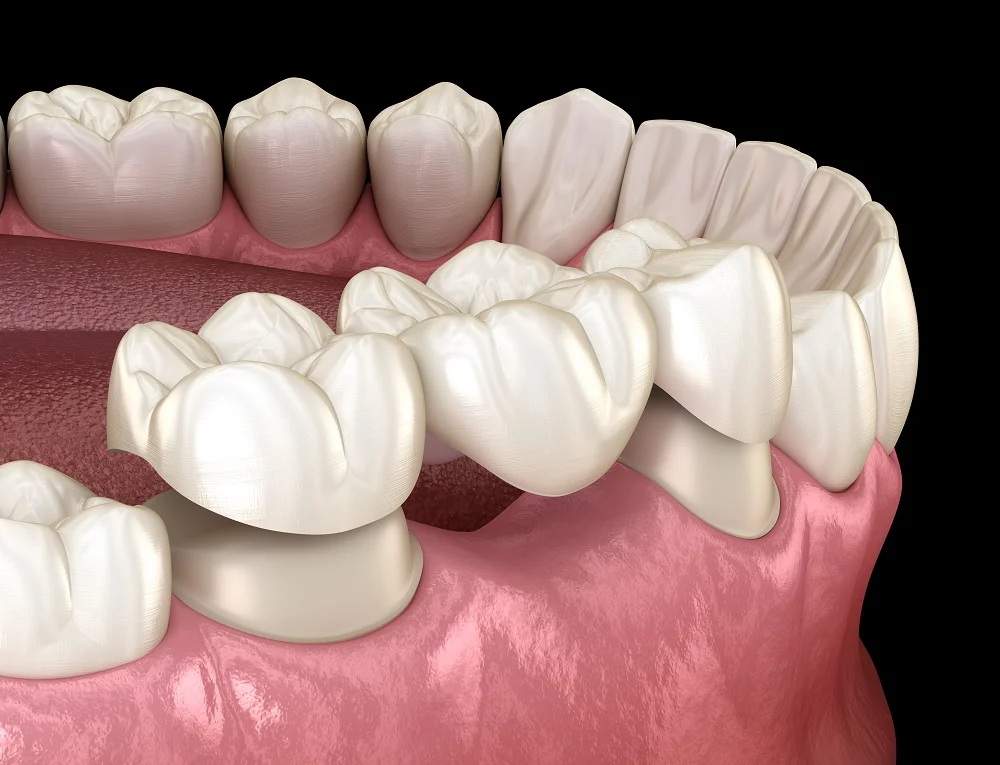
A traditional fixed bridge has three parts that work together:
- Abutments: the natural teeth on either side of the gap, each covered with a crown that anchors the bridge.
- Pontic: the replacement tooth (or teeth) that fills the space and is shaped to match your natural tooth.
- Connectors: the joined sections that link the pontic to the abutment crowns as one solid unit.
Because the abutment teeth receive crowns, a bridge can do double duty. If those teeth are already heavily filled, cracked or worn, the crowns strengthen them while they support the replacement tooth. Learn more about how we design porcelain crowns.
Choosing the Right Material for Your Bridge
The material depends on where the bridge sits and how much force it has to handle:
- Porcelain fused to metal: a metal framework for strength with porcelain on the outside for a tooth-colored finish. It is well suited to back teeth that take heavy chewing forces.
- All-ceramic: metal-free, with excellent light translucency, so it blends in well in the front of the mouth. Our Emax restorations are a popular metal-free option for patients who care most about appearance.
We match the shade, shape and surface texture of your bridge to your surrounding teeth. If you are also considering porcelain veneers or whitening, we plan the bridge color around your final smile goals.
Bridge, Implant or Partial: Comparing Your Options
A prosthodontic plan weighs every tooth replacement option side by side. We will walk you through the trade-offs:
- Fixed bridge: permanent and usually completed in a few weeks. It requires reshaping the neighboring teeth and does not replace the tooth root.
- Dental implants: stand alone without involving the neighboring teeth and help preserve jawbone. Treatment takes longer and requires adequate bone, which sometimes means bone grafting first.
- Partial dentures: removable and cost-effective, and they can replace several teeth in different areas of the mouth.
For many patients, a bridge is ideal when the teeth beside the gap already need crowns. In that situation, you get both protection and replacement in a single treatment. If you are weighing your choices, our page on missing teeth explains why it pays to replace a lost tooth sooner rather than later.
What to Expect During Treatment
- Consultation and planning: an exam, X-rays and a discussion of your goals, timeline and budget.
- Preparation: we numb the area and gently reshape the abutment teeth to make room for the crowns.
- Impressions and temporary bridge: we capture precise records of your bite, and you leave with a temporary bridge to protect the teeth.
- Final placement: we check the fit, the bite and the appearance of your custom bridge, adjust as needed and cement it permanently.
If a damaged tooth has to be removed before your bridge is made, we can handle extractions in our office and plan the healing time into your schedule.
Protecting Your Bridge for the Long Term
A well-made bridge can serve you for many years with the right care. The key is keeping the abutment teeth and gums healthy, since they support the entire restoration. Use a floss threader or water flosser to clean under the pontic, and keep up with routine cleanings and exams so we can check the margins and the cement. If you clench or grind at night, treating bruxism with a night guard helps protect the porcelain from chipping. Healthy gums matter too, because gum disease can weaken the teeth that hold your bridge in place.
Questions about cost or coverage? Visit our payment, insurance and financing page. If you are new to our practice, our new patients page explains how to get started.
Questions About Prosthodontic Fixed Bridges
Who is a good candidate for a fixed bridge?
Good candidates are missing one or more teeth in a row and have healthy, stable teeth on both sides of the gap, along with healthy gums. A bridge is an especially good fit when those neighboring teeth would benefit from crowns anyway.
How many teeth can a fixed bridge replace?
Most fixed bridges replace one to three teeth in a row. Longer spans place more stress on the abutment teeth, so we evaluate your bite and bone support to decide whether a bridge, implants or a partial is the stronger choice.
Why does a prosthodontic plan look at my whole bite before making a bridge?
Your bridge has to work in harmony with every other tooth when you chew. If teeth have shifted, or if your bite is uneven, a bridge that ignores those problems may wear quickly or feel off. Planning around the full bite helps the bridge last and feel natural.
Will my bridge match the color of my other teeth?
Yes. We custom-shade every bridge to blend with your natural teeth. If you plan to whiten, it is best to do it before your bridge is made, because porcelain does not change color with whitening treatments.
Is getting a fixed bridge painful?
We numb the area completely before preparing the abutment teeth, so most patients feel only pressure. Some mild sensitivity for a few days afterward is normal and usually eases with over-the-counter pain relievers.
How long does a fixed bridge last?
With good home care and regular dental visits, a fixed bridge can last 10 to 15 years or longer. Its lifespan depends mostly on the health of the supporting teeth and gums and on protecting it from grinding.
What happens if my bridge comes loose?
Call our office right away and keep the bridge somewhere safe. In many cases we can clean it and cement it back in place. We will also check the supporting teeth for decay or other changes.
Close the Gap With a Bridge Designed Around Your Bite
Your bridge should look natural, feel comfortable and protect the teeth around it for years. Call Galdiano Dentistry at (760) 966-0800 or request an appointment online. We will review your options and build a tooth replacement plan that fits your smile.