Rebuild a Strong Foundation for Your New Smile
When a tooth is lost, the jawbone beneath it slowly shrinks, and over time there may not be enough bone left to support a dental implant. Bone grafting at Galdiano Dentistry in Oceanside, CA restores that missing bone, giving your jaw the strength and volume it needs for a stable, long-lasting tooth replacement and helping preserve the natural shape of your face.
Request an AppointmentWhy Jawbone Loss Happens
Your teeth do more than help you chew. Every time you bite down, the roots stimulate the jawbone and signal it to stay strong. When a tooth is lost, whether from decay, injury, an extraction or advanced periodontal (gum) disease, that stimulation stops and the bone in the area gradually begins to break down.
The longer a gap goes untreated, the more bone is lost. This can cause neighboring teeth to shift, change the way your bite fits together and give the face a sunken look. For patients living with missing teeth, bone loss is also the most common reason a dental implant can’t be placed right away. Bone grafting solves this problem by rebuilding the jaw so an implant has solid bone to fuse with.
Types of Bone Grafts
During your consultation, we review your digital X-rays to measure how much bone you have and recommend the graft material best suited to your needs. There are three main options:
- Autogenous grafts use your own bone, usually taken from a non-essential area such as the chin. Because the bone is living tissue from your own body, it carries active cells that support healing, and the risk of rejection is very low.
- Allografts use human donor bone from a certified bone bank. The material goes through rigorous screening and processing to make sure it is safe before it is ever used.
- Xenografts use processed bone from another species, most commonly bovine (cow) bone, which acts as a natural scaffold that your own bone grows into.
Allografts and xenografts are popular because they don’t require a second surgical site to harvest bone, and the material is readily available in whatever amount your treatment calls for.
What to Expect During Bone Grafting
Your comfort comes first. We begin by thoroughly numbing the treatment area with local anesthesia. If you feel nervous about oral surgery, let us know ahead of time; our team is experienced in helping patients manage dental anxiety and fear.
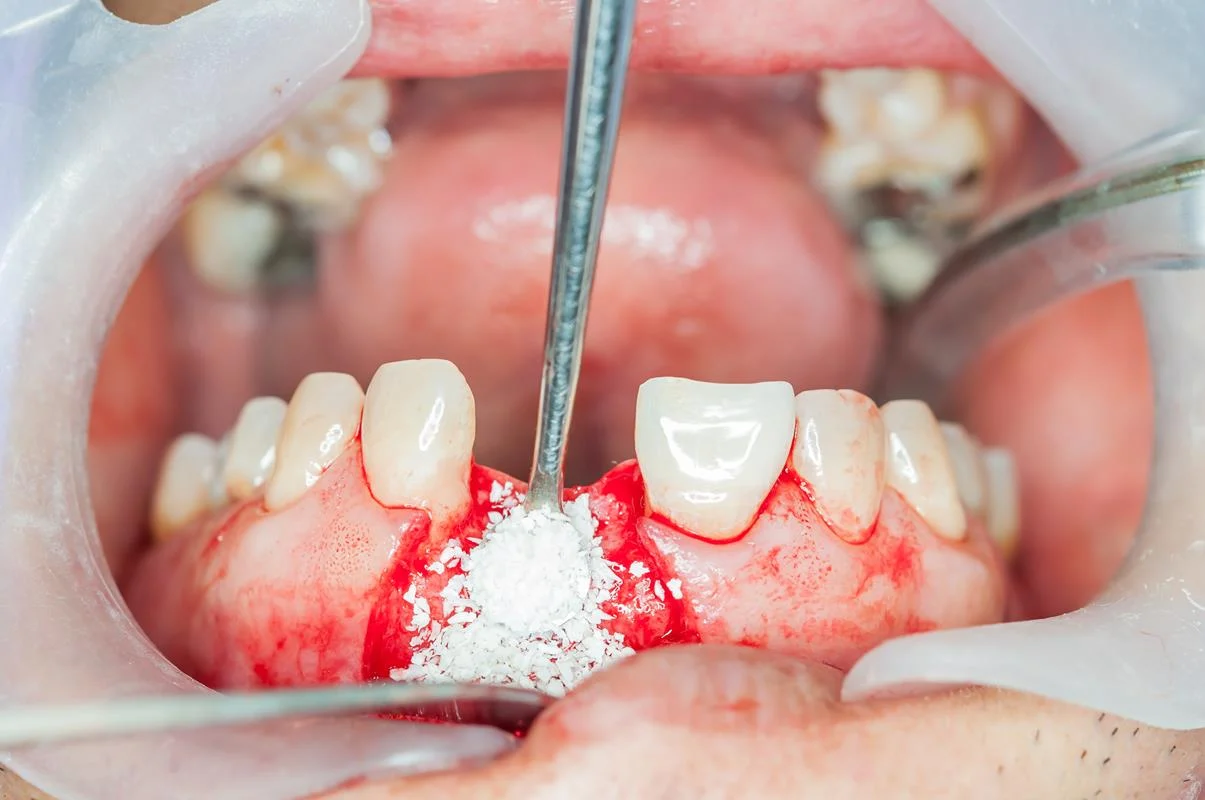
Next, a small incision is made in the gum tissue so the doctor can see exactly how much bone is needed. If your own bone is being used, it is gently harvested from the donor site, which is then closed with stitches. The graft material is placed where it is needed and secured, sometimes with small titanium screws, and additional bone-grafting material may be added to encourage healing. The gum tissue is then stitched closed over the site.
In some cases, grafting can be done at the same time as a tooth removal, such as a wisdom tooth extraction or the removal of a failing tooth, to help preserve the bone before it has a chance to shrink.
Recovery and Healing
After your procedure, you’ll go home with clear aftercare instructions and, when appropriate, antibiotics and pain medication. Most patients stick to soft foods such as pasta, yogurt, soup and gelatin while the area heals. Over the following six to nine months, the graft fuses with your existing bone and becomes part of your jaw. Once healing is complete, we can move forward with placing your implant.
Restoring Your Smile After Your Graft
A successful bone graft opens the door to a full range of tooth replacement options. Many patients go on to receive traditional implants, while others are good candidates for mini dental implants or implant-supported restorations. Added bone volume can also improve the fit and comfort of dentures and partial dentures or create a more natural contour beneath a fixed bridge. If gum tissue has also receded, a gum graft may be recommended to complete the foundation.
Bone grafting is one of the many oral surgery services we provide right here in our Oceanside office. We’ll walk you through every step of your plan and discuss your payment, insurance and financing options before treatment begins.
Bone Grafting FAQs
How do I know if I need a bone graft?
If you have been missing a tooth for some time, have had advanced gum disease or are planning a dental implant, you may have lost bone in the jaw. We use digital X-rays and a clinical exam to measure your bone and let you know whether grafting is needed before implant placement.
Is bone grafting painful?
The procedure is performed with local anesthesia, so you should not feel pain during treatment. Mild soreness and swelling are common for a few days afterward and are usually well managed with prescribed or over-the-counter pain medication.
How long does a bone graft take to heal?
Most bone grafts need about six to nine months to fully heal and fuse with your natural bone. Healing time depends on the size of the graft, the type of material used and your overall health.
Where does the graft material come from?
Graft material can come from your own body (autogenous), from a screened human donor bone bank (allograft) or from processed animal bone, usually bovine (xenograft). We will recommend the option that best fits your treatment goals.
What can I eat after a bone graft?
Stick to soft, cool or lukewarm foods such as pasta, yogurt, mashed potatoes, soup and gelatin for the first several days. Avoid chewing on the graft site, using straws and eating crunchy or very hot foods until we tell you it is safe.
Can a bone graft be done at the same time as an extraction?
In many cases, yes. Placing graft material right after a tooth is removed helps preserve the bone and can make future implant placement simpler. We will let you know if this approach is right for you.
Will my insurance cover bone grafting?
Coverage varies by plan. Some dental insurance plans cover part of the cost, especially when grafting is needed for a restoration. Our team will review your benefits and explain your payment and financing options before treatment.
Take the First Step Toward a Lasting Tooth Replacement
Bone loss doesn’t have to stand between you and a complete, confident smile. Call Galdiano Dentistry at (760) 966-0800 or request an appointment online to find out whether bone grafting is the right next step for you. New to our office? Visit our new patients page to learn what to expect.